
Transpose music online means changing the key of a song up or down using an online tool—without changing the tempo or rhythm. It’s the fastest way to make a song fit your vocal range or instrument, with no software installation required.
Whether a song feels too high, too low, or uncomfortable to sing, transposing the key solves the problem instantly.
This guide explains what transposing music means, why people transpose songs, and how to shift a song’s key online in seconds—accurately and safely.
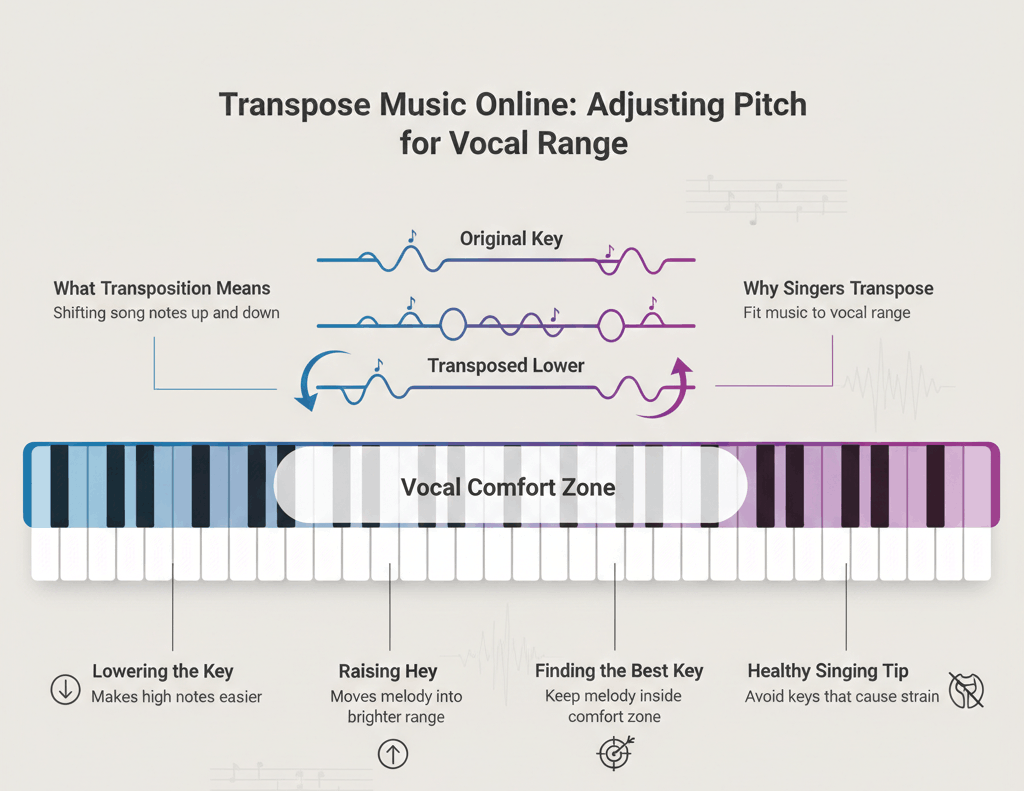
What Does It Mean to Transpose Music?
To transpose music means to change the key of a song by moving all notes up or down by the same number of semitones.
Transposing shifts the song higher or lower while keeping the melody, harmony, and tempo the same.
Why Transpose Music Online?
Online transposition is popular because it is:
- Instant – no DAW or downloads
- Accurate – semitone-based key changes
- Singer-friendly – preserves tempo and feel
- Flexible – test multiple keys quickly
Most people transpose music online because the original key doesn’t fit their voice.
When You Should Transpose a Song
You should transpose a song if:
- The song feels too high and causes strain
- The song feels too low and sounds weak
- High or low notes are consistently uncomfortable
- You’re covering a song written for a different voice
Helpful references:
How to Transpose Music Online (Step-by-Step)
Step 1: Upload Your Audio File
Most online tools support common formats like MP3 or WAV.
Step 2: Choose How Many Semitones to Shift
- Positive values = shift up
- Negative values = shift down
Step 3: Preview the Result
Listen carefully to how the song feels in the new key.
Step 4: Download or Use the Transposed Version
Once it feels comfortable, you’re done.
Recommended tool:
Online key changer
How Many Semitones Should You Transpose?
Most singers only need small key changes.
| Change | Effect |
|---|---|
| ±1 semitone | Subtle adjustment |
| ±2 semitones | Most common & effective |
| ±3 semitones | Major comfort improvement |
| ±4–5 semitones | Large shift (test carefully) |
Start with ±2 semitones, then adjust by ear.
Helpful tools:
Transpose Up vs Transpose Down
Transpose Up
Use this when:
- The song feels too low
- Your voice lacks projection
- Notes sit below your comfortable range
Transpose Down
Use this when:
- High notes cause strain
- Your voice feels tight or fatigued
- The melody sits too high overall
Does Transposing Music Change Tempo?
No.
Proper transposition changes key only, not speed.
| Transposition | Tempo |
|---|---|
| Changes pitch/key | Changes speed |
| Keeps rhythm intact | Alters timing |
| Singer-safe | Practice-focused |
Explanation:
Pitch vs tempo
Transpose Music vs Pitch Change vs Tempo Change
These terms are often confused.
| Action | What It Changes |
|---|---|
| Transpose | Musical key |
| Pitch change | Note height |
| Tempo change | Speed (BPM) |
Clear explanation:
Key change vs pitch change
Singer-focused option:
Pitch shifter for singers
Why Transposing Fixes Most Singing Problems
Transposing works because it:
- Moves the melody into your comfortable range
- Places most notes in your tessitura
- Reduces vocal tension and fatigue
Professional singers regularly transpose songs—especially for live performances.
What File Types Can You Transpose Online?
Most online tools support:
- MP3
- WAV
- Audio extracted from video
Related tools:
Is Transposing Music “Cheating”?
No.
- Choirs transpose music constantly
- Covers are rarely sung in original keys
- Karaoke tracks are almost always transposed
The goal is healthy, confident singing, not forcing the original key.
Frequently Asked Questions
Can I transpose music online for free?
Yes, many tools allow free key changes.
Does transposing affect sound quality?
Small changes (±1–3 semitones) preserve quality well.
Can I transpose music for practice?
Yes—this is one of the most common uses.
Can a song be transposed more than once?
Yes. You can test as many keys as needed.
- To understand how shifting works behind the scenes, this detailed process explains what happens when you transpose audio.
- If you’re unsure how far to move a song, this interval guide helps you pick the right amount.
- When vocals don’t sit well, this voice matching tool helps find a more comfortable key.
- To compare pitch with speed, this tempo and pitch overview shows how each adjustment affects music.
- For understanding tonal structure, this music key chart makes it easier to see where notes fall.
- If a track sounds strained, this song too high solution shows how to lower it after transposing.
- To apply changes directly, this online pitch changer lets you shift keys in real time.