
A pitch shifter for singers is a tool that allows you to raise or lower the pitch (or key) of a song so it fits your vocal range, without changing tempo or rhythm. Singers use pitch shifters to practice comfortably, avoid vocal strain, and perform songs in keys that suit their voice.
If a song feels too high, too low, or tiring, the issue is usually the key, not your singing ability.
A pitch shifter lets singers raise or lower song keys to fit their vocal range without strain. Adjust pitch by 1–6 semitones using pitch-shifting tools to avoid forcing notes, protect vocal cords, and maintain natural tone and control.
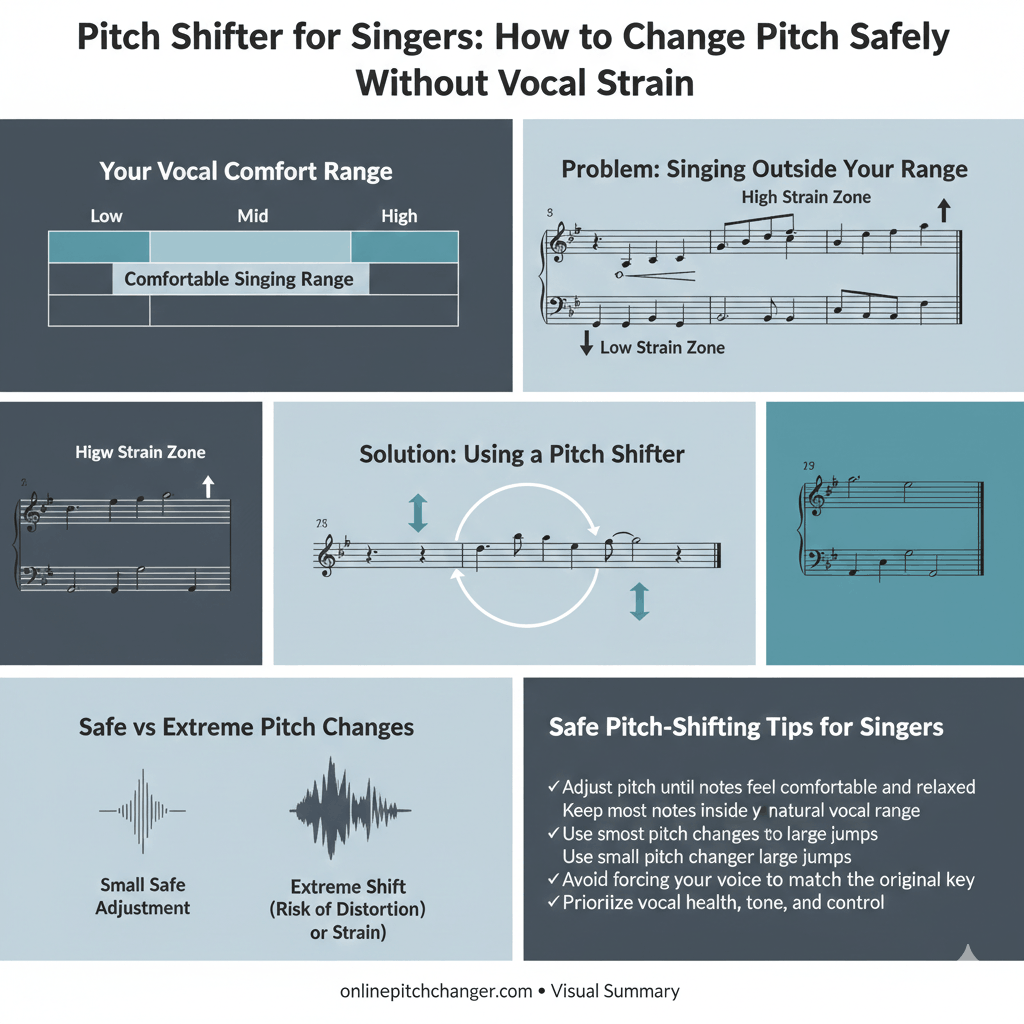
Many singers practice using a pitch changer for vocals.
What Is a Pitch Shifter for Singers?
A pitch shifter for singers is a tool that adjusts a song’s pitch (usually in semitones) so the music fits a singer’s vocal range, without speeding up or slowing down the song.
Singers use pitch shifters to:
- Practice songs in comfortable keys
- Adjust songs that are too high or too low
- Protect vocal health
- Perform covers in better keys
Core definition reference:
What is pitch in music?
Why Singers Actually Need Pitch Shifters
1. Original Song Keys Are Voice-Specific
Songs are written for specific singers, not for everyone. When a song sits outside your comfortable range:
- High songs cause strain and tension
- Low songs cause breathiness and weak tone
A pitch shifter lets you adapt the song to your voice, not force your voice to adapt to the song.
Learn how keys affect comfort:
Key for your vocal range
2. Pitch Shifters Reduce Vocal Fatigue
Singing repeatedly in the wrong key:
- Overworks the vocal folds
- Disrupts breath support
- Increases injury risk
Using a pitch shifter places most of the melody in your tessitura (the range where your voice sounds best), which:
- Improves tone
- Reduces effort
- Extends practice time safely
Pitch Shifter vs Key Changer vs Tempo Changer (Critical Clarity)
| Tool | What It Changes | Correct for Singers |
|---|---|---|
| Pitch shifter | Pitch/key (semitones) | Yes |
| Key changer | Musical transposition | Yes |
| Tempo changer | Speed only | No |
Modern singer-friendly tools combine pitch shifting + key changing correctly.
Clear explanation:
Key change vs pitch change
How Many Semitones Should Singers Change? (Most Accurate Guidance)
Featured-snippet optimized answer
Most singers only need small pitch adjustments:
- ±1 semitone → Subtle improvement
- ±2 semitones → Most common fix
- ±3 semitones → Major comfort gain
- ±4–5 semitones → Large shift (test carefully)
Start with ±2 semitones, then adjust by ear.
Helpful references:
Song Too High or Too Low? How Singers Use Pitch Shifters Correctly
If the Song Is Too High
Symptoms
- Strained high notes
- Tight throat or jaw
- Fatigue after a few takes
Fix
- Lower pitch by 1–3 semitones
Guide:
Song too high
If the Song Is Too Low
Symptoms
- Breathiness
- Weak projection
- Dull tone
Fix
- Raise pitch by 1–3 semitones
Guide:
Song too low
How Singers Should Use a Pitch Shifter (Step-by-Step)
- Identify whether the song is too high or too low
- Adjust by 1–2 semitones first
- Sing the entire song, not just the chorus
- Adjust by one more semitone if needed
- Stop when most of the song feels easy
The correct pitch should feel efficient, not forced.
Can Pitch Shifters Change Pitch Without Changing Tempo?
Yes. Modern pitch shifters separate pitch and tempo, allowing singers to:
- Practice at original speed
- Maintain groove and phrasing
- Avoid rhythmic distortion
Explanation:
Pitch vs tempo
Best Pitch Shifter for Singers (What Actually Matters)
A singer-focused pitch shifter should:
- Change pitch without tempo changes
- Preserve vocal clarity
- Allow fast key testing
Recommended tool:
Pitch shifter for singers
Related tools:
Is Using a Pitch Shifter “Cheating”?
No. It’s standard vocal practice.
- Professionals change keys regularly
- Choirs transpose music daily
- Karaoke tracks are almost never in original keys
The goal is healthy, confident singing, not forcing an unsuitable key.
Common Mistakes Singers Make With Pitch Shifters
- Changing too many semitones at once
- Ignoring tessitura
- Confusing pitch change with tempo change
- Practicing strain instead of fixing the key
If a song feels wrong, adjust the pitch first.
Frequently Asked Questions
Can pitch shifters help vocal training?
Yes. They allow safe, gradual range development.
Will pitch shifting reduce audio quality?
Small changes (±1–3 semitones) preserve quality in modern tools.
Do professional singers use pitch shifters?
Yes — for practice, rehearsal, and live preparation.
Is a pitch shifter the same as autotune?
No. Pitch shifters change the song, autotune alters the voice.
Final Verdict
A pitch shifter for singers is not a shortcut — it’s a vocal health and practice tool.
Used correctly, it helps you:
- Sing comfortably
- Avoid strain
- Practice longer
- Sound better in the right key
- To understand how digital tuning works, this clear process guide explains what happens when you shift pitch.
- If you need a fast online option, this pitch and tempo changer lets you adjust tracks without downloading software.
- When choosing a better key, this vocal range guide helps match songs to your voice.
- For common vocal issues, this pitch problem resource highlights what causes strain.
- To learn how much to shift, this semitone calculator shows exact pitch steps.
- If a melody feels too high, this song too high fix explains how to lower it safely.
- For quick file edits, this audio pitch tool lets you fine-tune tracks directly.