
Finding the best key for your vocal range is one of the most effective ways to improve your singing instantly. When a song fits your voice, notes feel easier, tone improves, and fatigue drops. When it doesn’t, even skilled singers struggle.
Best key for your vocal range: sing where most notes sit comfortably, not at your extremes. Find your highest and lowest easy notes, test the chorus, and transpose the song so you avoid strain, cracking, or breath loss while keeping strong tone.
What Does “Best Key for Your Vocal Range”?
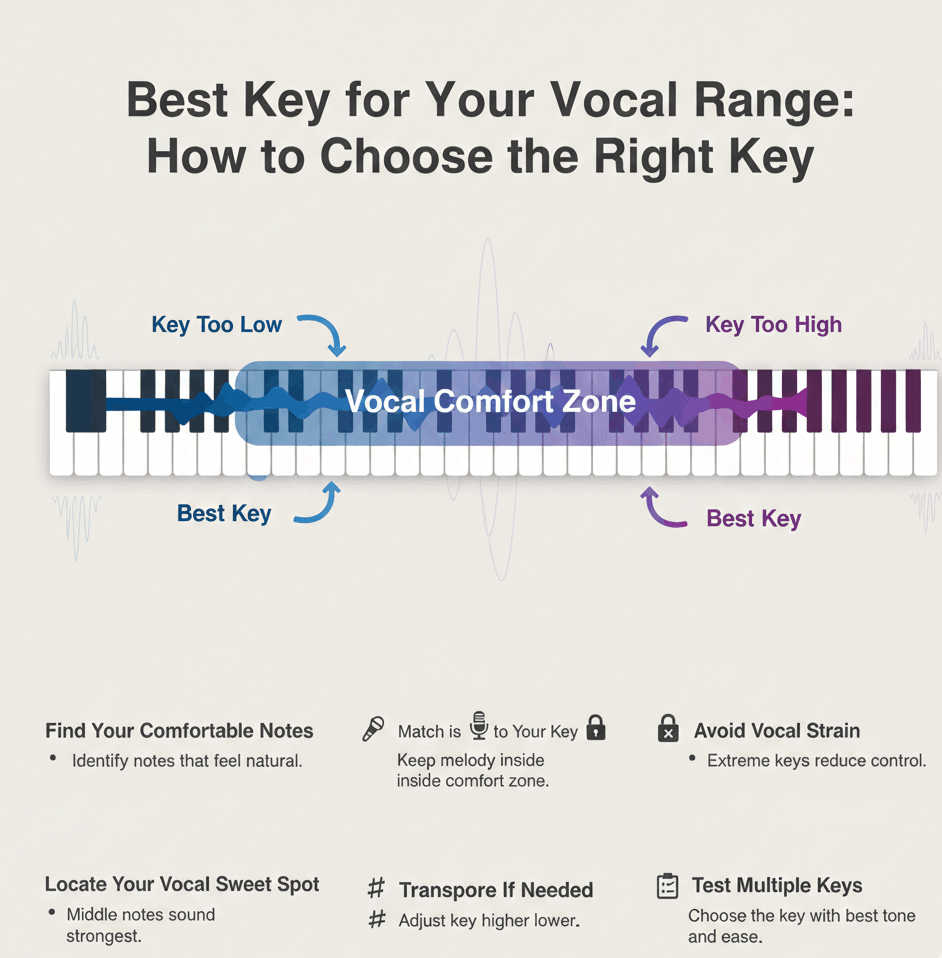
The best key for your vocal range is the key that allows you to sing the majority of a song comfortably, with stable tone, consistent pitch, and minimal strain.
This is not about hitting one high note at the end of the song. It’s about how your voice behaves throughout the melody.
The best key for your vocal range is the musical key that keeps most of the song within your comfortable singing range, allowing control and endurance without vocal strain.
Why the Song Key Matters More Than You Think
Many singers assume that struggling with a song means they need more practice. In reality, the problem is often the song key, not technique.
A poorly matched key can cause:
- Repeated strain on high notes
- Weak or unsupported low notes
- Cracking during register changes
- Pitch inconsistency
- Rapid vocal fatigue
If a song consistently feels uncomfortable, especially after warming up, the key is likely wrong for your voice. This is common when a song is too high, even if you can technically reach the notes.
When testing different song keys to find what fits your voice best, an online pitch changer can quickly shift tracks without re-recording.
Vocal Range vs Tessitura
Understanding the difference between vocal range and tessitura is essential.
- Vocal range: the lowest and highest notes you can sing
- Tessitura: the range where your voice sounds best and feels easiest most of the time
A song may fall within your range but still sit too high or too low in practice. The best key centers the melody around your tessitura, not your extremes.
This is why two singers with similar ranges may choose different keys for the same song.
How to Find the Best Key for Your Voice
1. Identify the song’s original key
Before adjusting anything, you need to know the starting point. Understanding what a song key is helps you make precise changes instead of guessing.
Reference:
What Is a Song Key?
2. Adjust the key in small steps
Most singers find their ideal key by moving the song 1–3 semitones up or down.
- If the chorus feels strained → lower the key
- If verses feel weak or too low → raise the key
Small adjustments often solve the problem completely.
Helpful guide:
How Many Semitones to Change Key?
3. Keep the tempo the same while testing
To evaluate a key accurately, the speed of the song must stay unchanged. Otherwise, the feel and vocal demands shift.
Use a method that lets you change pitch without changing speed, so what you hear reflects real singing conditions.
Practical explanation:
Change Pitch Without Changing Speed
Common “Comfortable” Keys
These are starting points, not rules:
- Many male voices feel comfortable around G, A, Bb, or C
- Many female voices feel comfortable around C, D, Eb, or E
However, voice type, experience, and song melody matter more than gender labels. Testing is always more reliable than charts.
For a structured approach tailored to your voice, see:
Key for Your Vocal Range
Capo vs Changing the Song Key
A capo changes the key for instruments, not for recordings. It works well for guitarists but does nothing for:
- Backing tracks
- Karaoke tracks
- Recorded music
For singers practicing or performing with audio tracks, digitally adjusting the key is the most flexible solution.
Frequently Asked Questions
What key is easiest to sing in?
There is no universal easy key. The easiest key is the one that fits your tessitura and vocal comfort.
Is it bad to change a song’s original key?
No. Professional singers regularly change keys to protect their voice and maintain consistency.
Will changing the key damage audio quality?
Small, controlled key changes preserve quality well with modern tools.
How do professionals choose song keys?
They prioritize comfort, endurance, and reliability over the original recording key.
If your reference song is on a streaming platform, Online Pitch Changer for YouTube allows key changes without downloading audio.
Final Takeaway
The best key for your vocal range is the one that lets your voice feel free, stable, and repeatable.
If a song feels hard, the key is wrong.
If it feels easy and controlled, you’re in the right key.
Test small adjustments, listen to your voice, and choose the key that works for you—not the recording.
For singers working with local tracks, an MP3 pitch changer is a simple way to test multiple keys quickly.
Related Articles:
- To understand how keys work, this clear overview explains the foundation of song keys.
- When matching music to your voice, this useful guide shows how to find your best range.
- If a track feels too high, this practical tip explains how to lower it comfortably.
- When everything sounds too low, this helpful option shows how to bring it back up.
- To make fast adjustments, this easy tool lets you shift the key online.
- To calculate the exact move, this handy reference gives you the right number.
- For vocal-focused edits, this dedicated tool helps keep voices natural.